
How It Works
How Shopping Visibility Works
Shopping Visibility gives you a clear, actionable view of how AI shopping engines understand, rank, and recommend products across categories.
STEP 1
STEP 2
STEP 3
01. Define
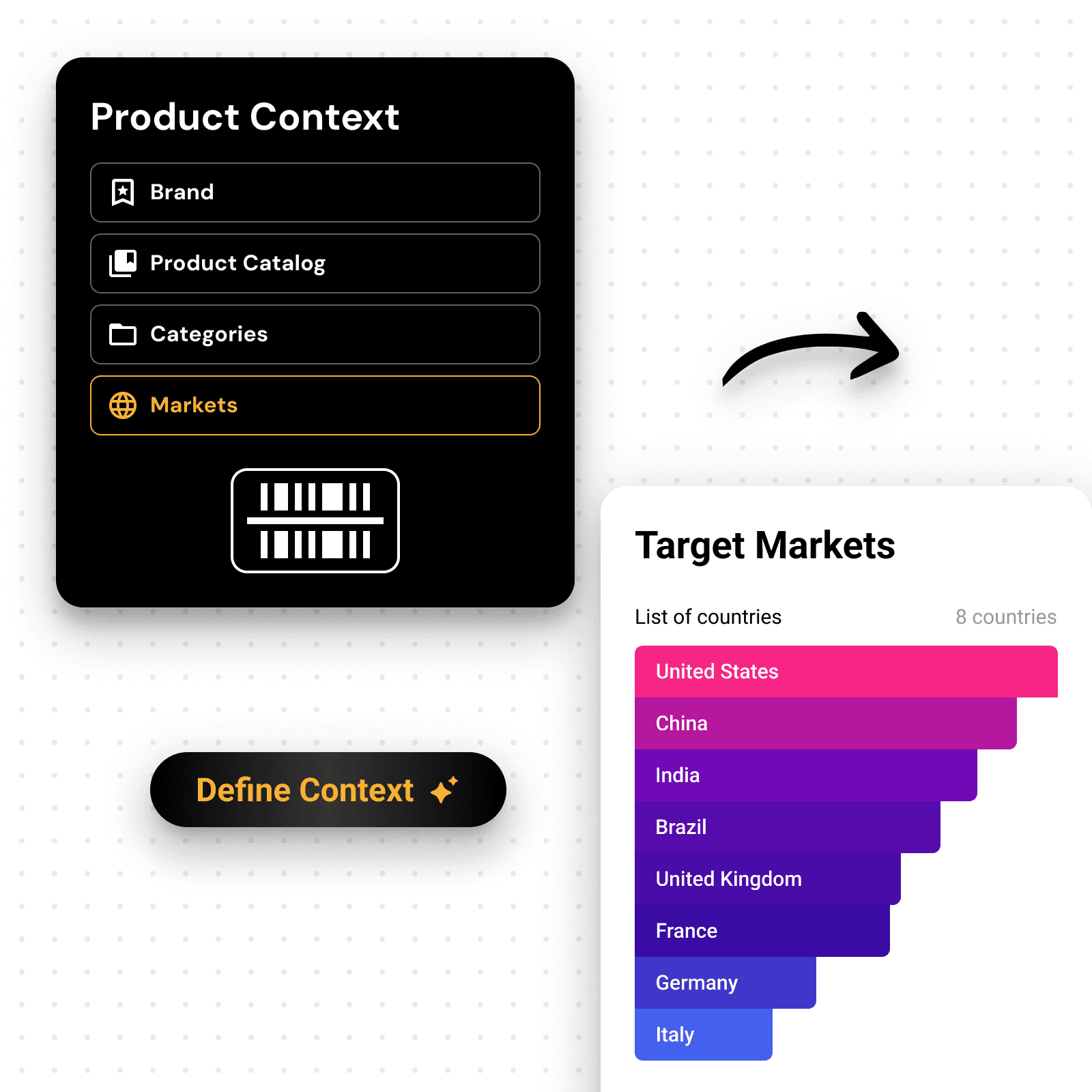
Define Your Product Context
Set the foundation for the analysis by defining:
Brand / retailer and priority SKUs
Catalog, categories & sub-categories
Markets and languages
This context anchors how AI shopping answers are generated and evaluated.
Top Features
Core Shopping Capabilities
Everything you need to analyze, compare, and monitor product visibility in AI shopping engines.
Product Ranking in AI Shopping
See which products are recommended, in what order, and for which shopping intents. Understand visibility gaps between your catalog and competitors across categories.
Product Mention Analysis
Identify how often products are mentioned and in which contexts: Top selling points, Best value, Top sellers. Understand what drives inclusion or exclusion.
Category & Competitive Analysis
Analyze AI shopping visibility at category level: which brands & sellers dominate recommendations, which attributes AI associates with each product, and how positioning differs by market or language
Citation & Source Mapping
Understand which sources influence AI shopping answers: Retailers, Marketplaces, Reviews, Editorial content. Identify where to invest to improve AI driven recommendation outcomes.
Seller & Marketplace Visibility
Track which sellers are recommended by AI: Marketplaces, Direct to consumer sites, Retail partners. Understand how seller presence impacts product selection.
Product Visibility Over Time
Monitor how AI shopping visibility evolves: before and after launches, after pricing or assortment changes, and following content or retail strategy updates.
Teams
What Teams Use Shopping Visibility For
Designed for teams shaping product visibility in AI-powered shopping journeys.
Ecommerce teams
Identify which products AI recommends and why some SKUs are invisible.
Brand teams
Understand how AI interprets product value, quality, and differentiation.
Retail & marketplace teams
Optimize presence across sellers and distribution channels.
Media & activation teams
Turn AI shopping insights into activation signals for search, retail media, and performance campaigns.
Frequently Asked Questions
Need a Bit More Info?
We’ve got friendly, straightforward answers to help you get the most out of Shopping Visibility.
What is Shopping Visibility in Share of Model?
It measures how AI shopping engines recommend products, brands, and sellers, revealing ranking logic, citations, and competitive gaps inside conversational shopping experiences.
How is this different from classic ecommerce analytics?
Classic analytics measure traffic and conversion after a click. Shopping Visibility measures what happens before the click, inside AI recommendations where choices are made.
Can I track competitors and marketplaces?
Yes. You can compare brands, products, and sellers across categories, markets, and AI shopping prompts.
How do teams activate these insights?
Insights can be used to: - Adjust product positioning - Optimize retail and marketplace presence - Inform content, SEO, and retail media strategies - Align AI perception with brand and commercial priorities